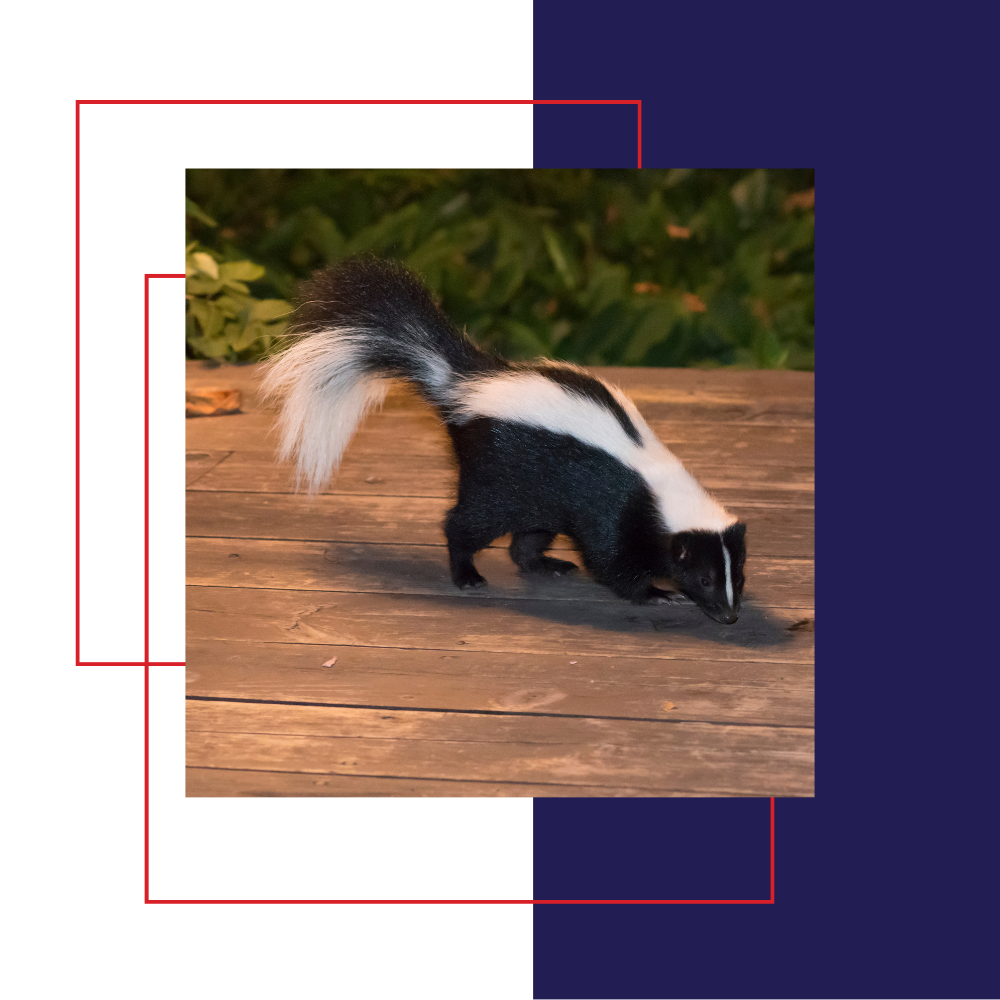
Skunk Removal And Control
Skunks create a particular kind of disruption that tends to catch property owners off guard. Their presence often becomes clear long before anyone sees them, as their odor lingers across yards, garages, and exterior structures. That smell can cling to surfaces, pets, and belongings for far longer than most expect, and when skunks settle in, the problem rarely fades on its own. Our team approaches these situations with a focus on understanding how these animals move, what draws them in, and how to interrupt their routines without creating additional complications. Texas settings, with their mix of open land and suburban development, can present ideal hiding spots for unwanted intruders, which is why early action matters.
Many people first notice disturbed soil near porches, gaps under outbuildings, or torn sections of lawn. These signs point to feeding behavior or attempts to dig out a sheltered space. When that behavior takes hold, skunks can cause structural wear, persistent odor issues, and even conflicts with pets. We treat each scenario as something that needs thoughtful evaluation, since every yard layout or building foundation provides different access points. By examining entry areas and surrounding conditions, our professionals work to determine the scale of the issue before choosing a method to resolve it.
Understanding Animal Behavior And Risks
Skunks tend to settle where food, shelter, and minimal disturbance come together. They often forage at night, slipping under decks, finding space beneath sheds, or using crawl areas that offer easy cover. When they begin spending time near living spaces, the disruption can grow from mild annoyance to something much more intrusive. Property owners sometimes underestimate how stubborn these animals can be when they find a place that suits them. Their digging can weaken soil around supports, and the lingering odor can embed itself into outdoor areas in a way that becomes difficult to ignore.
Our professionals place significant emphasis on identifying what keeps skunks returning. Whether it’s accessible food sources, overgrown vegetation, or structural gaps, addressing those factors helps reduce the problem. We also pay close attention to how these animals behave when startled, since their defensive spray can affect anyone nearby, including pets. By pairing behavioral understanding with practical field experience, we guide property owners through options that reduce ongoing concerns. The goal is to make the environment less appealing to skunks while working toward an effective removal process that minimizes additional disturbance.
Addressing Wildlife Intrusions
When our team steps into a skunk problem, the first task involves examining the property to determine how the animals entered and what allowed them to remain undetected. That assessment often includes checking soil patterns, tracing pathways along fences, and looking for the sheltered pockets that the critters prefer. Once we understand the layout and conditions, we shape a plan that suits the property rather than relying on a one-size-fits-all approach. Each intrusion presents its own challenges, from narrow crawlspaces to dense vegetation that hides activity.
After forming a plan, we move toward resolving the intrusion using methods designed to avoid unnecessary stress on the animals while reducing disruption for property owners. Throughout the process, we maintain focus on preventing further access. This includes reinforcing vulnerable areas and advising on adjustments that can discourage future activity. We also take time to explain what signs property owners should watch for in case skunks attempt to return. Clear communication helps everyone understand what’s happening around the home and what steps may be needed moving forward.
Long-Term Prevention
Once the immediate intrusion is handled, long-term prevention becomes essential. Our professionals help identify environmental conditions that encourage skunks to linger. Overgrown brush, unsecured garbage, gaps around foundations, and stored materials that provide shelter can draw wildlife into spaces where they don’t belong. By adjusting these conditions, property owners give themselves a better chance at maintaining a more controlled environment.
We understand that disruptions can repeat if conditions remain unchanged, so we guide property owners through recommendations tailored to their property’s layout. Reducing attractants and improving structural barriers can make a noticeable difference. Our role involves offering insight based on field experience and emphasizing proactive steps that reduce the chances of ongoing conflicts. Though no environment can be completely protected from wildlife interest, thoughtful prevention measures help limit activity and support a more manageable living space.
Our intention is to help property owners resolve skunk issues with thorough evaluation, effective fieldwork, and taking measure to promote better long-term conditions. At Texas Pest Elimination, we understand how frustrating these critters can be, especially when the associated odor, digging, and repeated intrusions start to affect daily routines. Whatever the circumstances of your infestation situation are, our team focuses on creating a plan grounded in practical solutions that are customized to your specific situation. To learn more or to schedule services, don't hesitate to contact us today so we can provide support and answer questions you may have.
Frequently Asked Questions About Skunks
Q1. What Signs Suggest That Skunks Are Actively Spending Time Around A Property?
A1. People often notice unusual soil disturbances, small openings near structures, or a sudden increase in strong odor around outdoor areas. Skunks tend to leave subtle trails along fences or under decks as they search for food or shelter. Pets may also act unsettled if they sense activity. When these clues begin appearing together, it usually means the animals have found a comfortable spot nearby and may be returning regularly.
Q2. How Does Professional Service Help Reduce Ongoing Problems?
A2. Our process focuses on identifying what keeps the animals interested in the area and addressing those conditions directly. This may involve locating hidden access points, evaluating the surroundings for attractants, and determining how the animals are using the space. By identifying the patterns behind the intrusion and correcting the factors that support it, long-term improvement becomes far more realistic than relying solely on quick fixes.
Q3. Why Do Skunks Choose Certain Spots Over Others When Looking For Shelter?
A3. Skunks look for quiet, covered locations that offer protection and easy movement. Spaces under porches, sheds, or decks often appeal to them because these areas stay undisturbed and provide dependable cover. Vegetation that grows close to structures or debris near foundations can also create appealing pathways. When a property gives them both concealment and nearby food access, they tend to return until those conditions change.