Millipede Exterminator
Millipedes are often mistaken for centipedes or a number of other, more aggressive species, but their behavior and the problems they create are different from the others, which means an infestation of these particular pests requires a different strategy. These slow-moving arthropods feed primarily on decaying organic matter and thrive in damp, protected environments. In Texas, seasonal rain, irrigation, shaded landscaping, and dense ground cover create ideal conditions around foundations. When moisture levels spike outdoors or food sources shift, millipedes migrate in large numbers, sometimes pressing against walls, slipping under doors, or entering through expansion joints and utility penetrations.
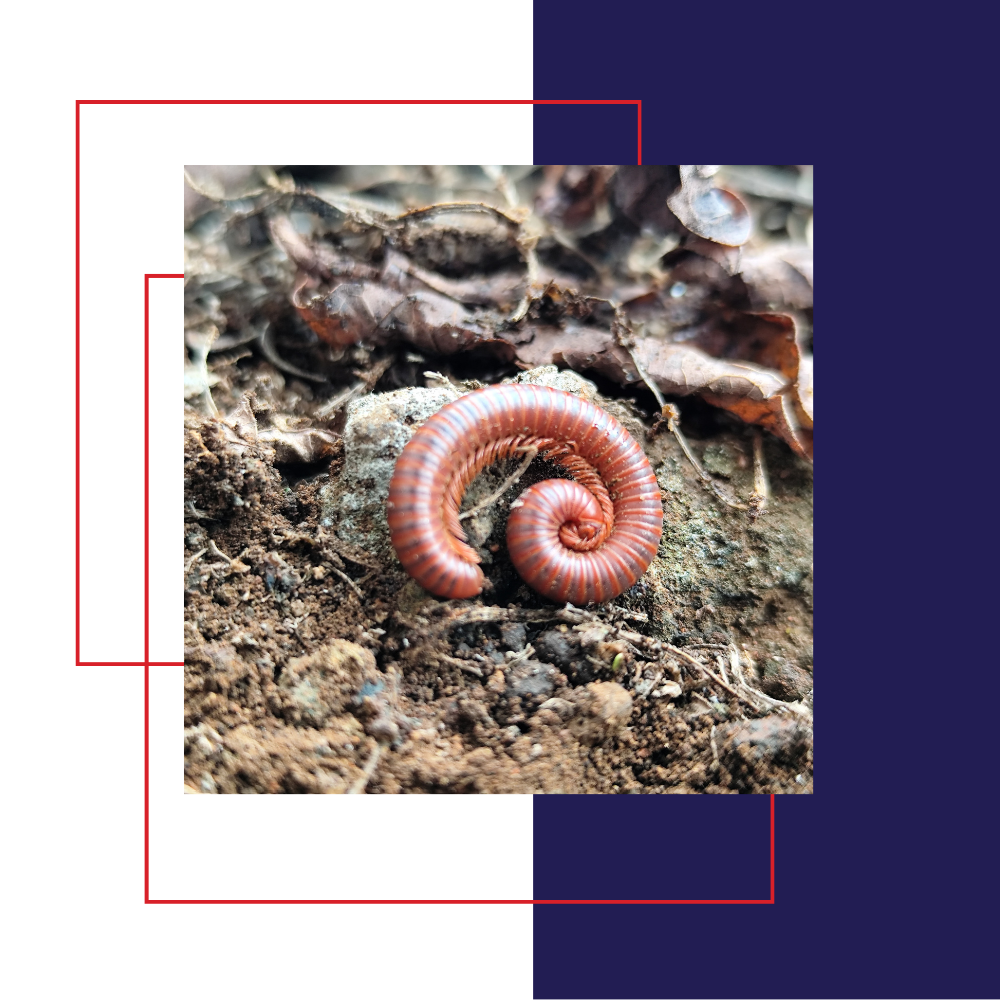
Once inside, they do not reproduce or feed on household materials, but their presence quickly becomes disruptive. Their bodies curl when disturbed, and when crushed they can release fluids that stain flooring, baseboards, and walls. The issue often escalates because these bugs tend to arrive in waves rather than as isolated intruders. That pattern points to exterior conditions that are drawing them in, not random chance. Addressing those conditions requires understanding soil moisture, harborage zones, and how structural features guide movement from the yard into living spaces.
Environmental Factors That Fuel Their Activity
Moisture management sits at the center of our control efforts for these pests. Their pests lose water easily and seek environments that help them stay hydrated. Overwatered lawns, clogged gutters, low spots near foundations, and thick mulch beds trap moisture close to structures. Woodpiles, leaf litter, and compost heaps offer both shelter and food, allowing populations to build quietly over time. Dense ground cover planted close to exterior walls can further restrict airflow, creating cool, humid pockets that support prolonged activity.
Soil composition also plays a role. Areas with heavy clay soils tend to retain moisture longer after rainfall, extending favorable conditions well beyond the storm itself. When combined with poor drainage or sloped landscaping that directs water toward the structure, millipedes are given repeated opportunities to migrate. Understanding how these environmental elements interact helps explain why activity may intensify during certain months rather than remaining consistent year-round. Landscape features like decorative stones or plastic weed barriers often exacerbate the problem. While they look clean, they trap condensation against the soil, providing a hidden sanctuary where millipedes thrive. Furthermore, poorly ventilated crawlspaces pull damp air and pests into the home’s subflooring, during the high-humidity Texas summers.
How Our Methods Are Implemented
Effective millipede service begins with a detailed inspection focused on exterior conditions. Entry points, foundation lines, drainage patterns, and landscape features are evaluated to determine how and why movement is occurring. Interior sightings help confirm travel paths, but the core of the work happens outdoors where populations originate. Special attention is given to areas where soil meets structural materials, since these transitions often guide movement during periods of environmental stress.
Treatment strategies may include targeted exterior applications along foundation perimeters, crack and crevice treatments in key transition zones, and adjustments to harborage areas that encourage activity. Recommendations often involve modifying irrigation habits, reducing excessive mulch depth, and improving airflow in shaded areas. In some cases, soil treatments around high-pressure zones help limit migration during seasonal population surges. These steps reduce moisture retention and limit the environments millipedes depend on. Our technicians also prioritize utility penetrations, meaning entry points where pipes and wires enter the home, as these are often overlooked areas. By applying granular barriers in the landscape and liquid residuals on vertical surfaces, we create a multi-layered defense. This ensures that even if millipedes bypass the lawn, they encounter a deterrent before reaching the foundation.
Our professionals focus on creating a perimeter that discourages movement toward the structure while addressing the conditions that allowed the issue to develop. This process is designed to interrupt activity patterns rather than temporarily suppress visible pests. When environmental contributors are reduced, the pressure driving millipedes indoors declines over time, resulting in more consistent control.
Long-Term Prevention And Property Protection
Preventing future millipede problems requires ongoing awareness of how a property changes with seasons and landscaping choices. New plantings, altered drainage, or shifts in watering routines can unintentionally recreate favorable conditions. Regular monitoring helps catch these changes before populations can rebuild.
Sealing expansion gaps, improving door sweeps, and maintaining foundation integrity further limit access points. While millipedes are not structural pests, their presence signals excess moisture near the building envelope. Addressing that moisture benefits the property as a whole by reducing conditions that attract a range of unwanted insects.
Our services are designed to support long-term prevention rather than short-lived fixes. By aligning treatments with environmental management, the goal is to keep millipedes where they belong, outdoors in natural settings, instead of allowing repeated indoor disruptions.
Millipede activity can feel overwhelming when it happens suddenly and in large numbers, but it is a solvable issue when handled with the right strategy. Texas Pest Elimination provides millipede services that focus on environmental control, targeted treatments, and practical prevention. To restore comfort and reduce future pest activity, don't hesitate contact us today at Texas Pest Elimination today to schedule service or to inquire about how our services can help you.
Frequently Asked Questions About Millipedes
Q1. Why Do Millipedes Give Off A Nasty Smell And Leave Behind Stains?
A1. Many species possess specialized glands along their bodies that secrete a pungent fluid when they feel threatened. This liquid serves as a chemical defense to discourage predators like birds or small mammals. In a home environment, this same fluid can cause unsightly yellowish or brown marks on surfaces if the arthropod is crushed or handled roughly. It is generally best to sweep them up or use a vacuum rather than stepping on them to prevent these stubborn stains.
Q2. How Long Do These Multi-Legged Pests Actually Live In The Wild?
A2. Unlike many common insects that live for only a few weeks or months, millipedes are remarkably long lived. Some species can survive for seven to ten years in their natural habitat. They grow slowly and go through several molting stages, adding more body segments and legs each time they shed their outer shell. This longevity is why established populations in a yard can feel persistent, as the same individuals may remain active across multiple seasons.
Q3. Do Millipedes Really Have One Thousand Legs, As Their Name Suggests?
A3. Despite the literal translation of their name, most common species found around residential properties actually have between 40 and 400 legs. They are distinguished from other arthropods by having two pairs of legs on most of their body segments. While they might not hit the thousand mark, their coordinated leg movement allows them to push through heavy soil and dense leaf litter with ease. This physical design makes them powerful burrowers but keeps them moving at a much slower pace than their predatory centipede cousins.